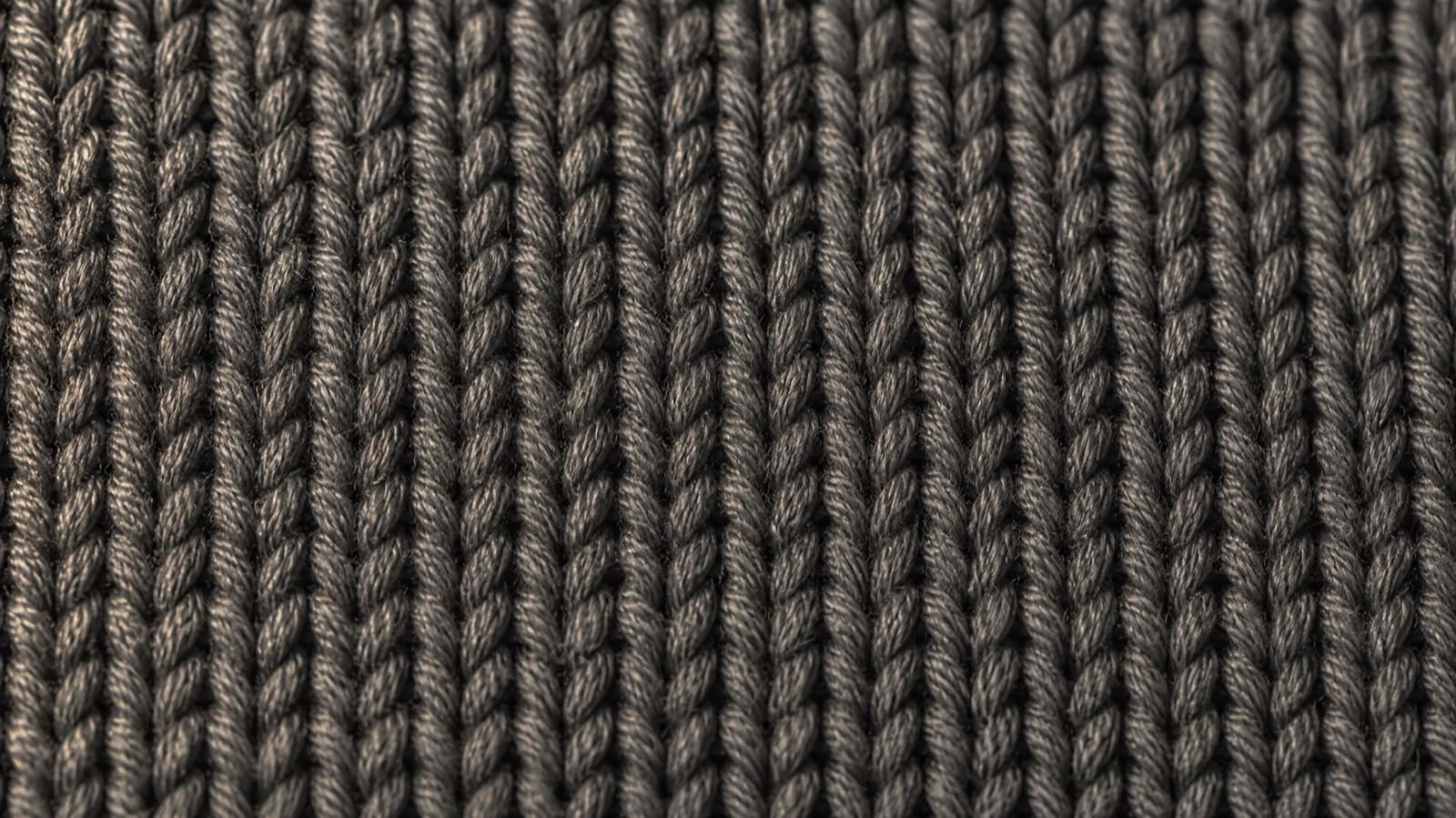
How it is made
Knitted to shape, not cut from cloth.
We list the yarn count, the ply, and what will still pill.
Two ways to make a sweater.
Only one of them is knitting.
Most knitwear on sale is cut and sewn. A machine produces a long roll of knitted jersey, panels are cut out of it with a die, and the panels are sewn together. It is fast, it is cheap, and the sweater is really a t-shirt made from thicker fabric.
Shaped knitting — maglieria — works the other way round. Each panel is knitted to its final outline, one row at a time, and the finished edges are joined to each other. The yarn becomes the garment directly.
This is why our product pages lead with yarn count, ply and micron rather than fabric weight in grams per square metre. There is no square metre. There is a yarn and a structure.
01
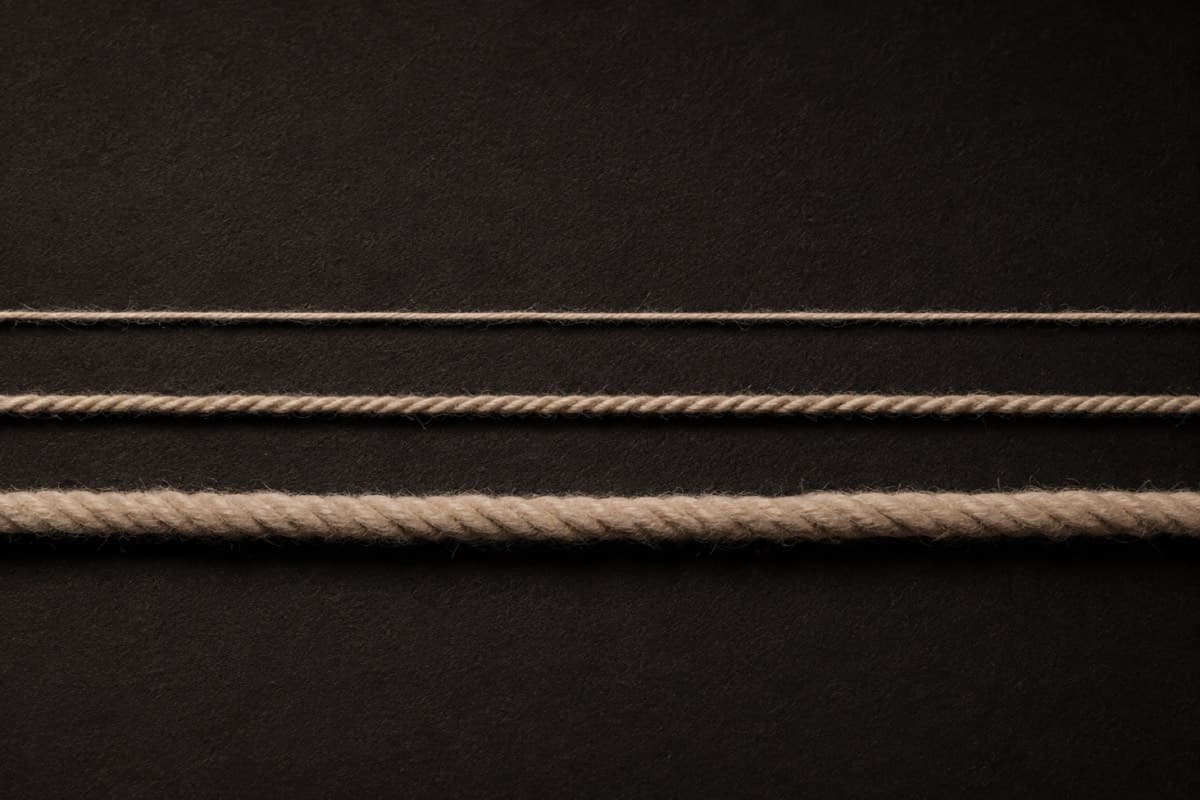
The yarn is chosen first
Fibre diameter, ply and twist are decided before a single panel is designed, because they determine everything that follows: warmth, softness, how fast it pills and whether it can survive a machine.
02
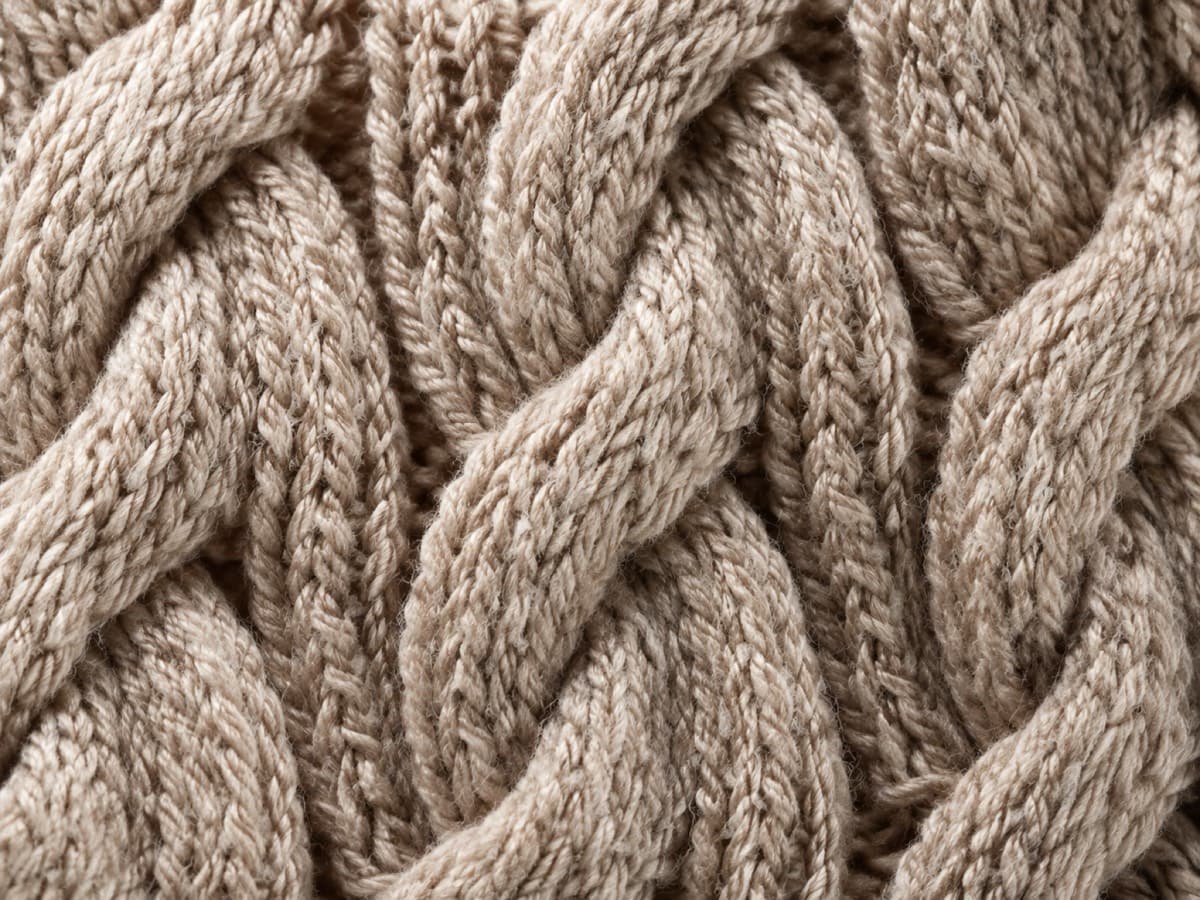
Each panel is knitted to its outline
Stitches are added and dropped to shape the armhole, the shoulder slope and the sleeve taper. The panel comes off the machine already the shape it needs to be. Nothing is cut out of a roll.
03
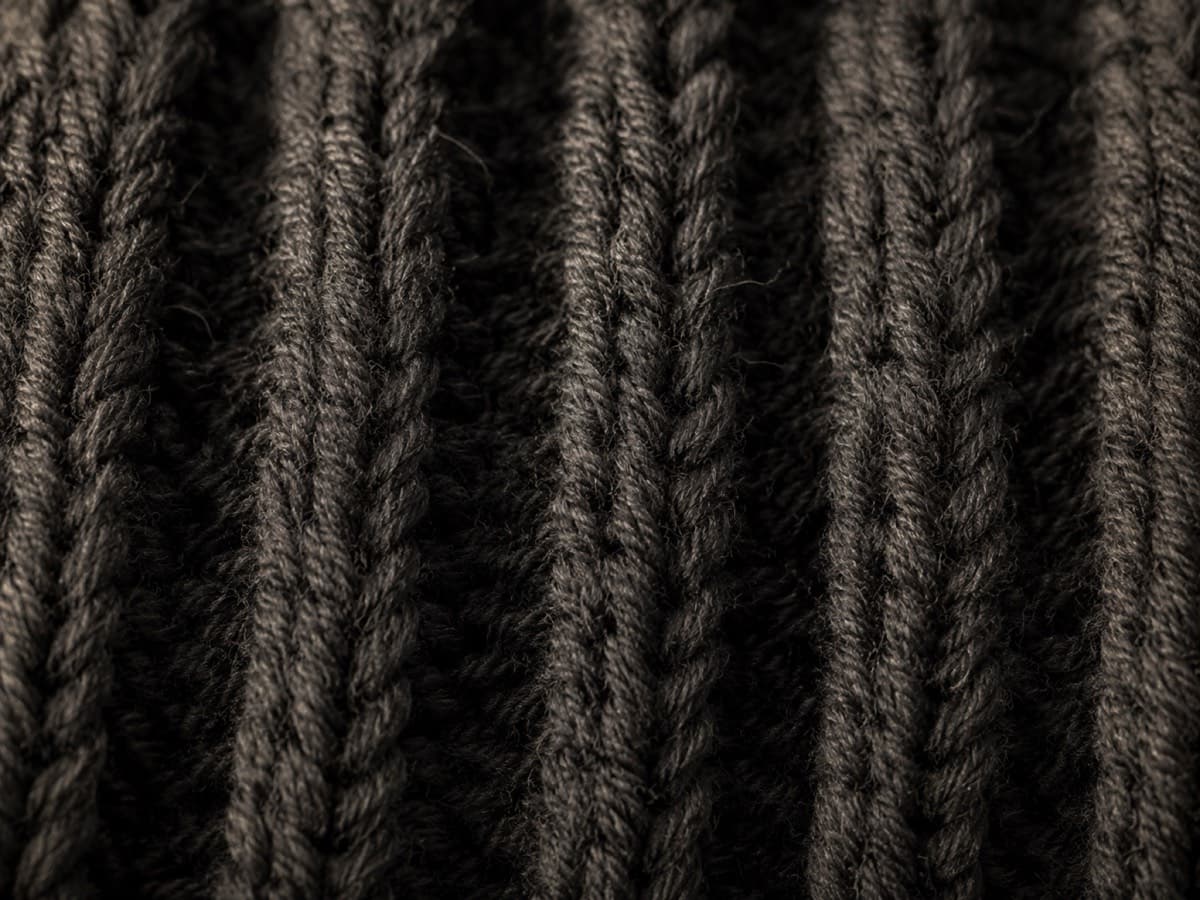
Finished edges are joined to finished edges
Because no edge was cut, no edge frays, and the seam is a join rather than an overlap sewn through. That is the whole reason a shaped knit keeps its shoulder line.
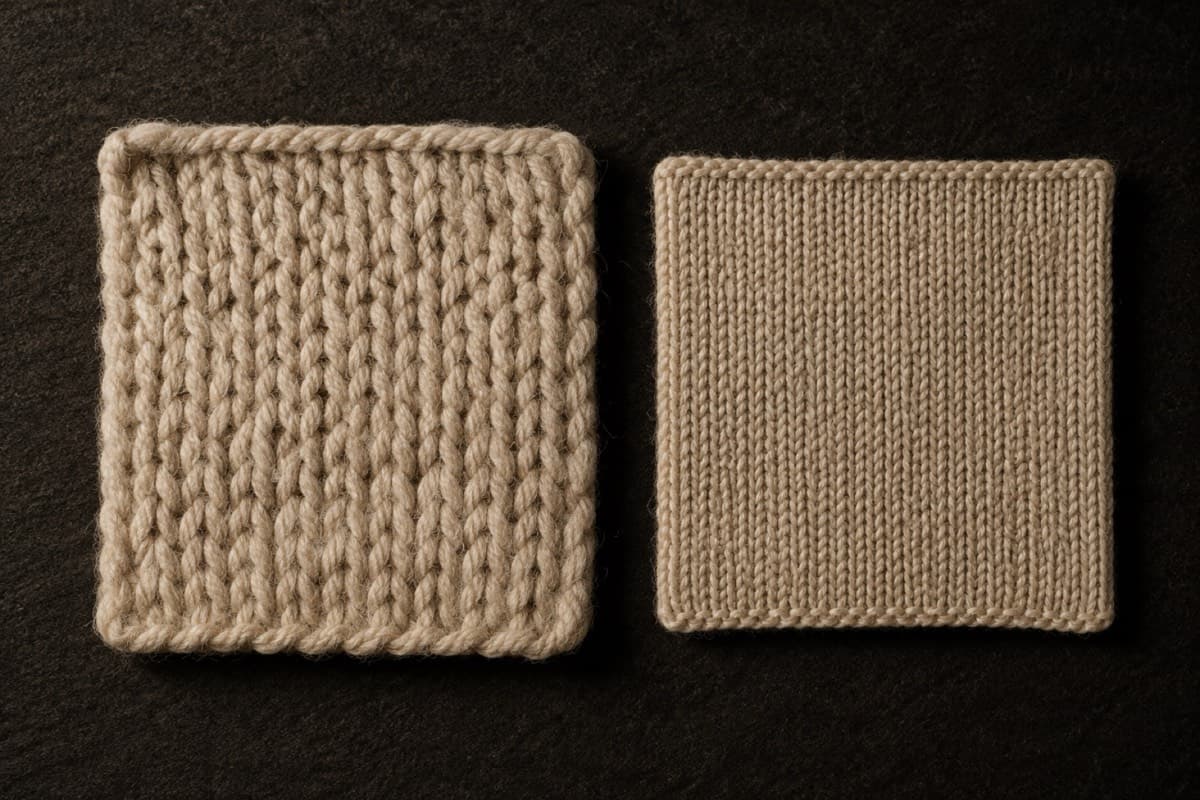
04
It is washed before it is measured
Knitting relaxes on its first wash. Every number in every size table on this site is taken after that wash, so the garment you receive matches the table rather than beating it by two centimetres.
Why we print the bad news
A shop that only lists advantages is not describing a material.
every fibre property you want is paid for with one you did not
Fineness is what makes a fibre feel soft against skin, and fineness is what makes it abrade faster. Loft is what makes a yarn feel warm for its weight, and loft is what tangles into pills. Nylon buys you wear resistance and charges you in hand feel.
You cannot describe cashmere as soft, warm, hard-wearing and easy to look after without lying about at least two of those. So we publish the trade-offs on the front of the site, in a tool that removes yarns and tells you which property removed them.
And on every wool piece we print four rows: what it does about pilling, prickle, felting and moths. The last two almost never appear on a knitwear page anywhere. A piece here cannot go on sale without all four.
One piece is not for sale.
We designed 41 pieces and we sell 40. E-06 was to be a blend containing recycled fibre. We can say what the wool and the polyamide are; we cannot yet evidence the recycled percentage or where that material came from.
So it stays off the shop. A recycled claim without a traceable chain is not a claim we are entitled to make, and taking the product down was easier than writing around it.