Cura della maglieria
Will it pill? Will it itch? What if I wash it wrong?
Cura della maglieria — pilling, infeltrimento, tarme
The four things wool does, the conditions that cause them, and who carries the cost when something goes wrong. Written as the questions people actually ask us.
Will it pill?
Yes. Every wool piece on this site will pill, and so will every wool piece anywhere else. A pill is a small ball of fibre ends that have worked loose and tangled together. It forms where two surfaces rub: the underarm, the side seam, the inside of the sleeve against a jacket, and wherever a bag strap sits.
What varies is how fast. Short, fine fibres work loose soonest, which is why cashmere pills more than merino and lambswool pills more than a wool-nylon blend. Every product page states a pilling grade and the test that produced it (Martindale abrasion, 2,000 rubs, assessed to ISO 12945-2). Grade 5 is unchanged, grade 1 is heavily pilled.
Pilling is not a manufacturing defect and it is not covered by the legal guarantee. It is a property of the fibre you chose.
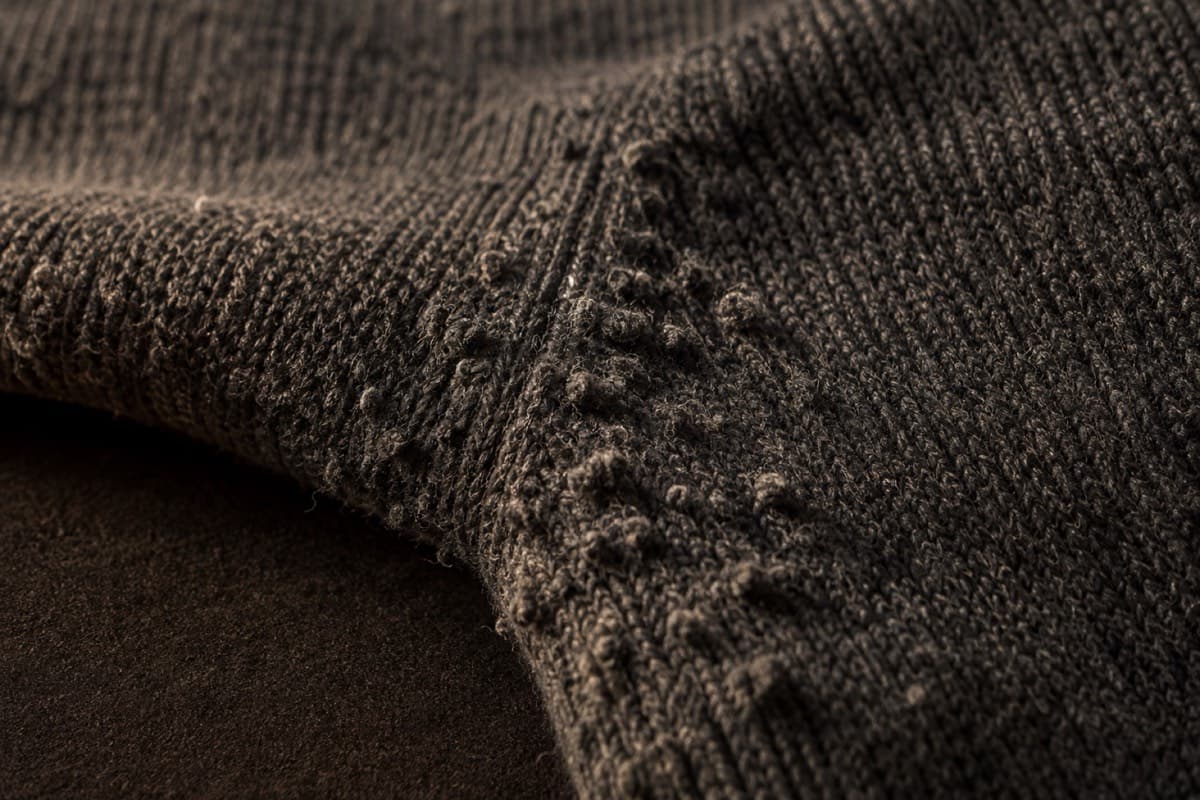
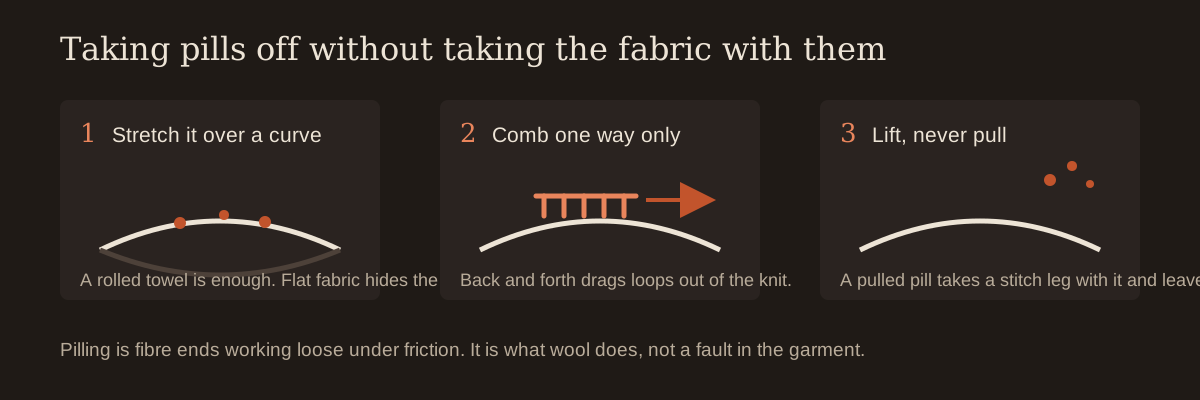
Use a comb or a battery pill shaver, never scissors and never your fingers. A pulled pill takes a stitch leg with it, and on a shaped knit that becomes a hole.
Will it itch?
It depends on the fibre diameter and on you. Wool prickle is mechanical: coarse fibre ends are stiff enough to push against the nerve endings in your skin instead of bending. The measurement that predicts it is the mean fibre diameter, in microns.
Below roughly 19.5 μm most people feel nothing. Above roughly 23 μm most people do. Between the two it varies by person and by how much skin is in contact — a crew neck over a t-shirt is a different question from a turtleneck on bare skin.
We print the micron value on every wool product page and we do not say any garment is free of prickle, because that is not something we can know about your neck.
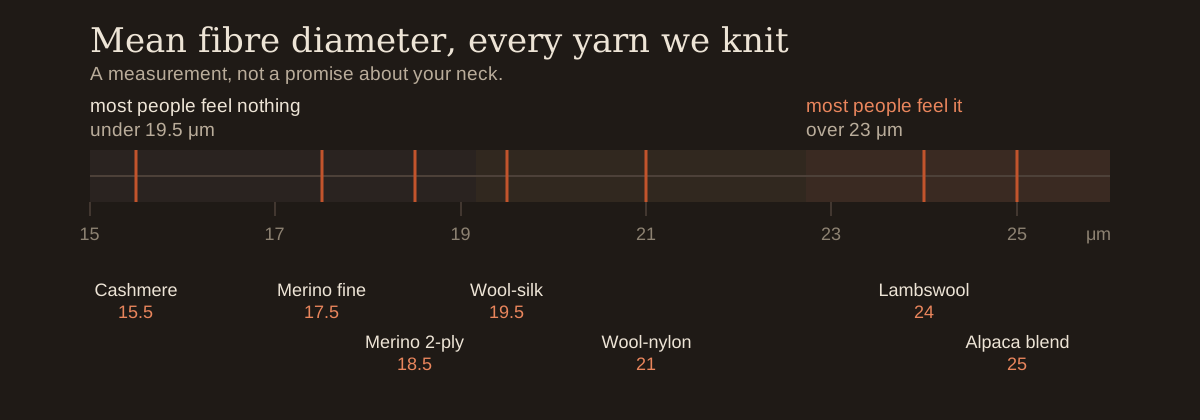
If you have reacted badly to wool before, the safest starting points are C-01 at 15.5 μm or the cotton line, which contains no animal fibre at all.
Anyone with a known allergy to wool or animal hair should not buy the wool, cashmere, alpaca or blend lines.
What happens if I wash it too hot?
It felts, and felting cannot be undone. Wool fibres are covered in microscopic scales. Heat opens them, agitation makes them ratchet past one another, and once they have interlocked they stay interlocked. The garment comes out smaller, denser and harder, and the knitted structure has closed up.
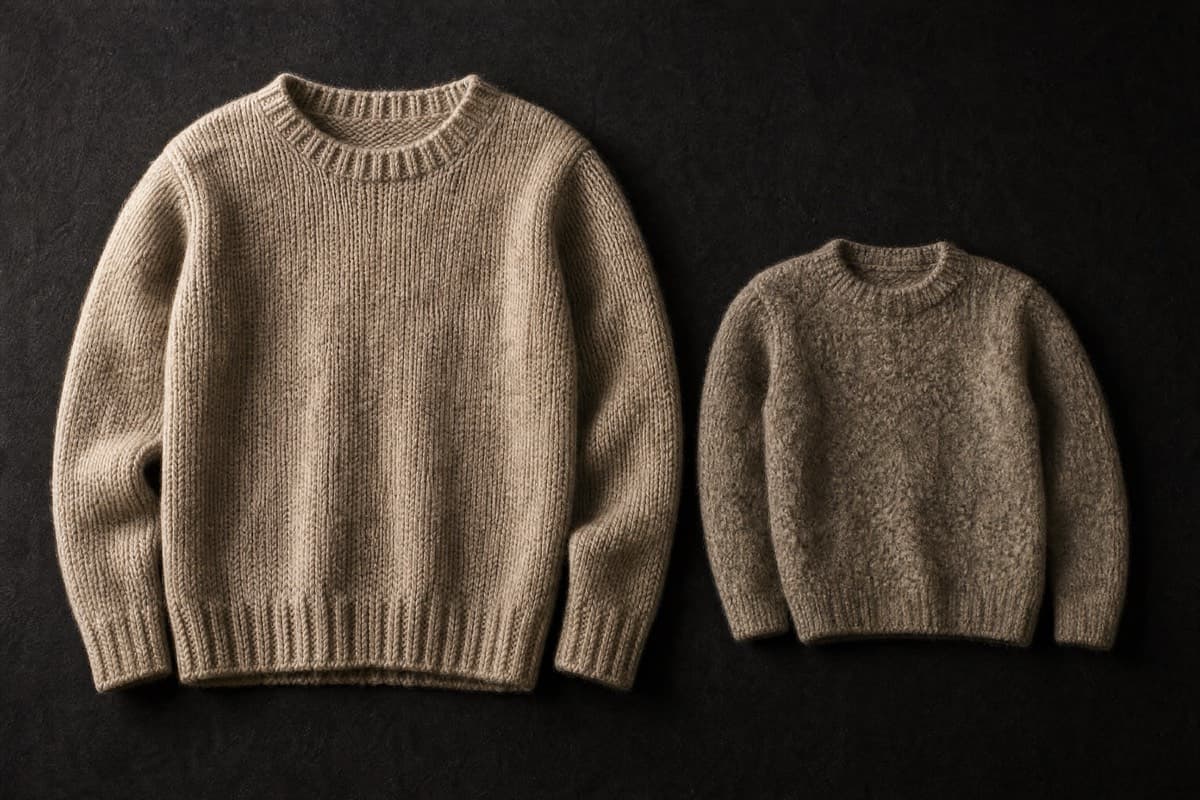
The conditions that prevent it are on every product page and on the sewn-in label:
- a stated maximum wash temperature, which is 30 °C on every wool piece we sell
- whether a machine wool cycle is allowed, or whether the piece is hand wash only
- dry flat, never on a hanger and never in a tumble dryer
Who carries the cost. If a garment felts because it was washed outside the stated conditions, that is damage caused by use, not a lack of conformity, and it is not covered by the legal guarantee. A concrete example: a piece labelled hand wash, maximum 30 °C that is put through a 60 °C machine cycle and comes out two sizes smaller is not a defective garment.
The reverse is also true. If a piece felts while being washed exactly as labelled, that is a conformity problem and it is ours. Write to us with the wash programme and temperature you used and we will deal with it under the two-year legal guarantee. The full guarantee terms are here.
Will moths get into it?
They will if you give them the chance. Wool, cashmere and alpaca are protein fibres, and clothes moth larvae eat protein. Cotton and linen are not at risk.
Moths are attracted by what is on the wool rather than the wool itself — skin oils, sweat, food traces. A garment put away clean is far less interesting to them than one worn twice and folded away.
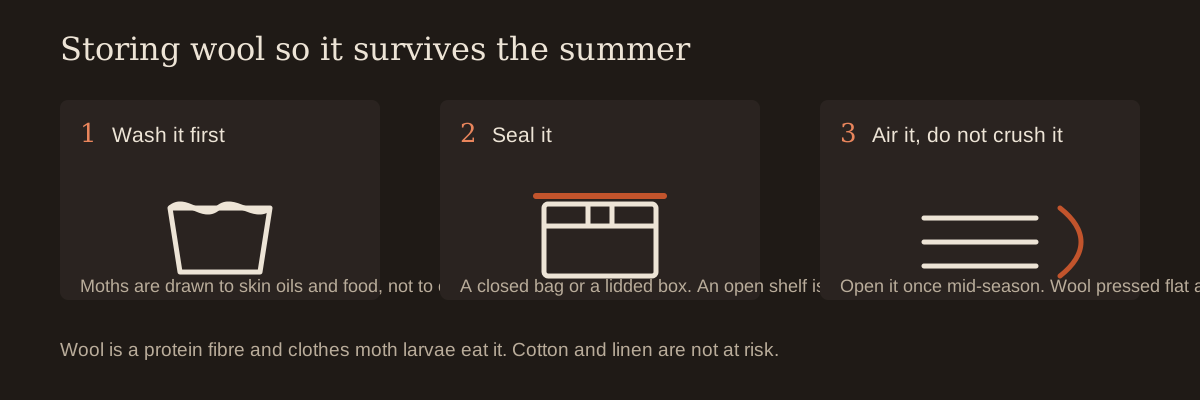
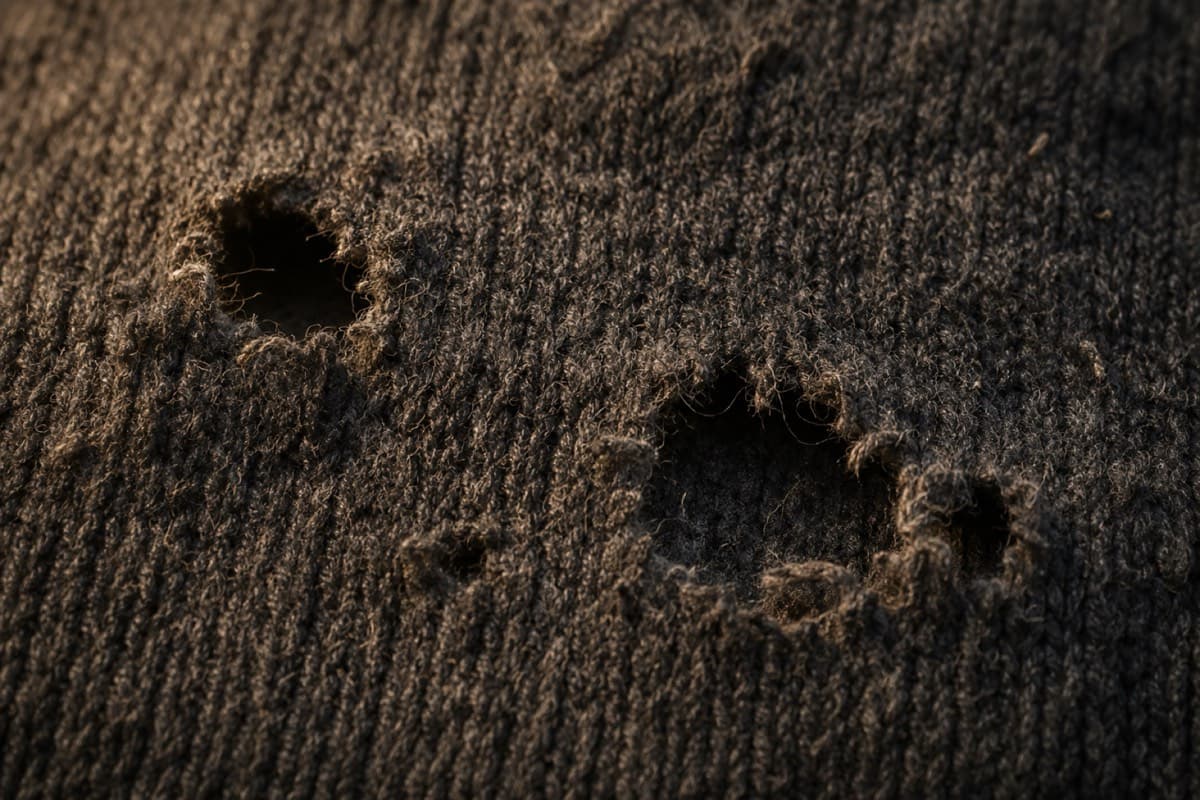
Check stored knitwear once mid-season. If you find holes, wash or freeze everything in that space before putting anything back — the eggs are what you are dealing with, not the adult moths you can see.
How do I actually wash it?
- Turn it inside out. Most of the abrasion in a wash happens to the outer surface.
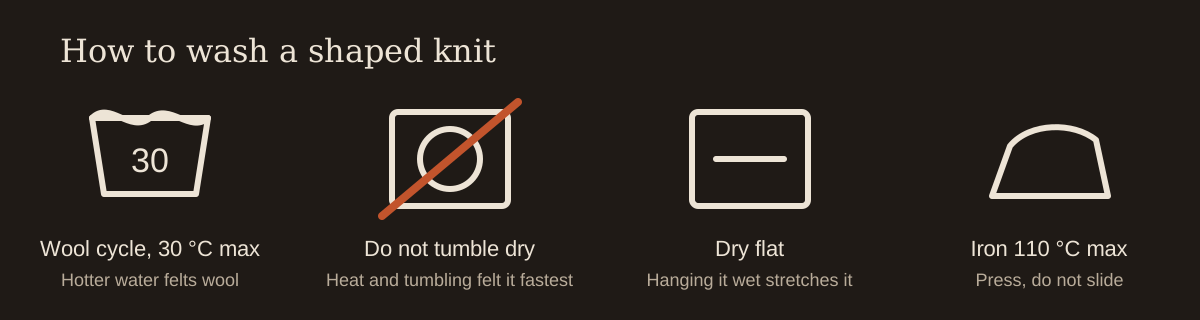
- Wool cycle at 30 °C with a wool detergent, or hand wash in still water at 30 °C for the pieces marked hand wash only. Do not rub, do not wring.
- Press the water out between two towels. Wool holds several times its own weight in water and that weight is what stretches it.
- Dry flat, reshaped to the measurements in the size table. A four-ply piece takes up to 48 hours.
- Iron at 110 °C maximum if you iron at all. Press and lift, never slide.
Between washes, air it. Wool sheds odour on a hanger overnight, which is why it can be worn many times between washes and why washing it less is the single best thing you can do for its life.
How long should one of these last?
With the care above, five years of regular winter wear is a reasonable expectation for the merino, lambswool, cotton and nylon-blend pieces. Pure cashmere is the exception: it is the least abrasion-resistant fibre we sell, and heavy weekly wear will show at the cuffs and elbows sooner than that.
Shaped knitting helps here. Because the panels are knitted to their final outline rather than cut, there are no raw edges inside the garment to fray, and the seams are joined edge to edge rather than overlapped and stitched through.
A pilled sweater that has been combed is not a worn-out sweater. Most knitwear is thrown away for cosmetic reasons long before the structure gives up.
Contatti: support@italiamoda.space · +39 333 726 1845
Need a person rather than a page? Write to us here.